The launch of the Motorola Edge 70 has been the talk of the town, not just for its technology, but for its sheer audacity in design. In a world where phones are getting chunkier to accommodate monstrous batteries and massive camera sensors, the Edge 70 swoops in like a supermodel on a runway. The official price for the 8GB RAM + 256GB storage variant is ₹29,999 (with bank offers available), placing it squarely in the brutally competitive premium mid-range segment.
Motorola isn’t just selling a phone; they’re selling a statement: Impossibly Thin. Yet Uncompromised.
But is this just clever marketing jargon? For years, the phrase “ultra-slim” meant compromising on the battery. Motorola claims to have broken this curse by using a new Silicon-Carbon battery technology. We’re going to push this phone to its limits—from intense gaming sessions to all-day photography—to see if the Edge 70 truly manages to be both a stunner and a workhorse. Get ready for the detailed breakdown.
A high-quality hero shot of the Motorola Edge 70 in PANTONE Bronze Green.
QUICK SPECS TABLE
Before we dive into the experience, here are the core specs of the Indian variant of the Moto Edge 70:
Android 16 (Guaranteed 3 OS + 4 Years Security Updates)
Dimensions/Weight
5.99mm Thin, 159g Weight
DESIGN & BUILD (Deep Dive)
The 5.99mm thickness is the headliner, and trust me, pictures don’t do justice to how impossibly slender this phone feels. When you hold it, it feels less like a gadget and more like a high-end fashion accessory. It’s a genuine show-stopper in terms of design.
The In-Hand Feel: A Class Apart
The real-world advantage of the 5.99mm profile is its weight: a mere 159 grams. This makes the Edge 70 one of the lightest premium mid-range phones you can buy today. Coming from a device that crosses the 200g mark, the difference is night and day. It literally disappears in your pocket.
Motorola has ditched the usual glass or glossy plastic back for a unique, nylon-inspired silicone finish on the PANTONE Bronze Green and Lily Pad models. This is not just for looks; it offers a fantastic grip and keeps fingerprints at bay. The frame is Aircraft-grade Aluminum, which adds the necessary rigidity to a device this thin.
The Durability Question: Is a super-thin phone fragile? Not this one. Motorola has gone all out with an IP68/IP69 rating, meaning it’s completely dustproof and can withstand submersion and high-pressure, high-temperature water jets. Plus, it carries the MIL-STD 810H military-grade certification. This is a combination of durability ratings you rarely see even on flagships. It’s a marvel of engineering.
The Trade-off: While the body is 5.99mm, the rear camera module does protrude noticeably. While Motorola has done a great job integrating the bump into the back panel for a seamless look, using the phone on a flat surface without the provided case will still result in a slight wobble. The truth is, without a case, you feel the bump more because the rest of the body is so ridiculously thin.
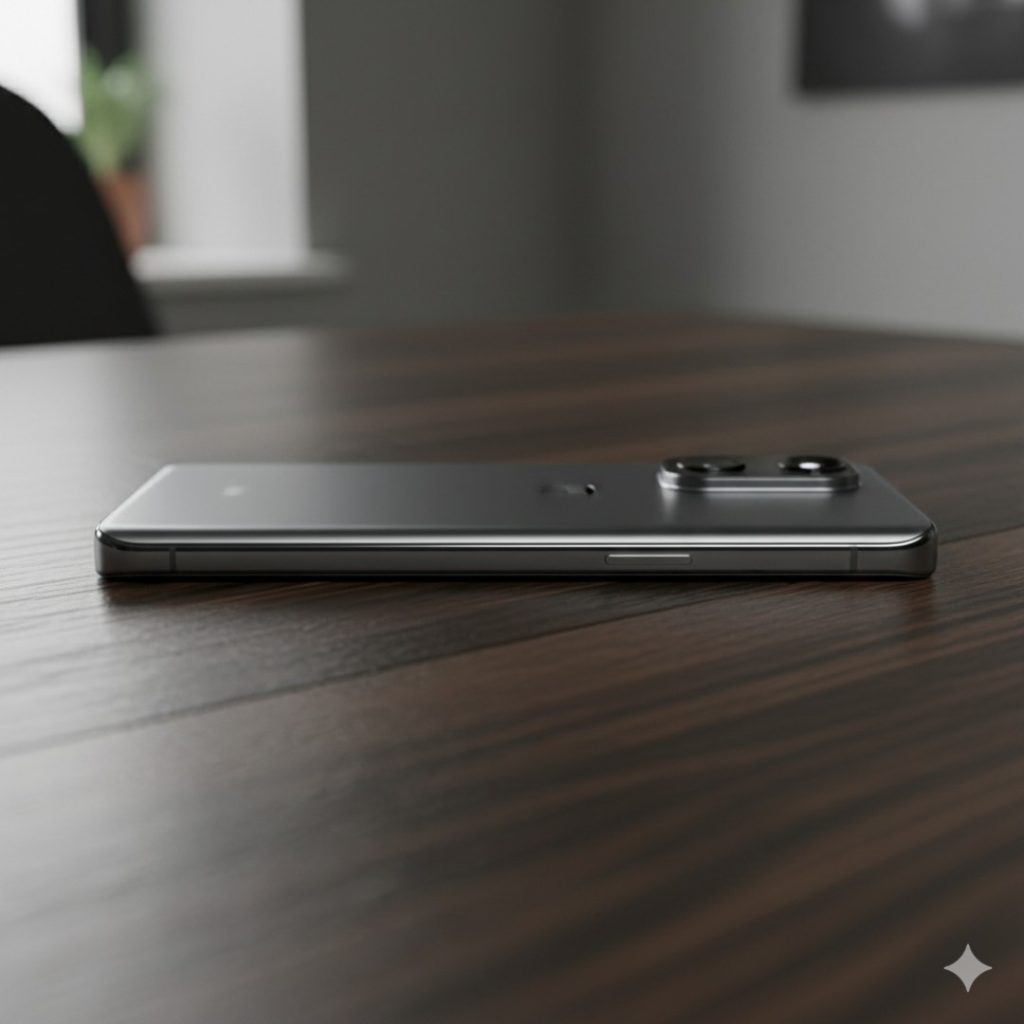
A side profile shot of the Motorola Edge 70 in PANTONE Gadget Grey resting on a dark wooden desk.
DISPLAY & VISUALS
Motorola has equipped the Edge 70 with an absolute feast for the eyes: a 6.7-inch Extreme AMOLED display.
Beyond Standard AMOLED
This is not your average Full HD+ panel. It boasts a 1.5K (2712 x 1220) resolution, which translates to a sharp 446 pixels per inch (ppi). What really elevates the experience, however, are the colors. The screen is Pantone Validated, which means color accuracy is practically guaranteed—a huge plus for content creators or anyone who appreciates true-to-life colors. It supports a 10-bit color depth, capable of displaying over a billion shades.
Brightness & Outdoor Visibility: The screen is simply a monster when it comes to brightness. It hits a peak of an insane 4500 nits. In my outdoor visibility test under the harsh Indian afternoon sun, the screen remained perfectly readable. Normal brightness is typically around 1600 nits (HBM), which is still excellent. Watching HDR10+ content on Netflix or YouTube is a vibrant, dazzling experience.
Smoothness: The 120Hz refresh rate and up to 300Hz touch sampling rate make scrolling, navigating the UI, and light gaming feel silky smooth. However, a major point to note: it is not an LTPO panel, so the refresh rate cannot dynamically drop down to 1Hz for extreme battery saving. It switches between a few fixed rates (60Hz, 120Hz), which is a small trade-off at this price point.
Unique Feature: The inclusion of Water Touch technology is a subtle but genius addition for the Indian monsoon or a sweaty gym session. It makes the screen responsive even when wet, preventing those frustrating mis-taps.
Motorola Edge 70 screen showing a vibrant, colorful abstract wallpaper with deep blacks and bright contrasting colors.
PERFORMANCE & GAMING/USAGE
This is where the rubber meets the road. The Edge 70 is powered by the Qualcomm Snapdragon 7 Gen 4 (4nm) processor, paired with 8GB of high-speed LPDDR5X RAM and 256GB of UFS 3.1 storage.
Real-World Stress Test: It’s Fast, But Not a Flagship Killer
For day-to-day use—juggling between Gmail, WhatsApp, social media, and a dozen Chrome tabs—the performance is fluid, fast, and entirely lag-free. The Android 16 experience is nearly stock, and Motorola’s Hello UI is lightweight, which works wonders with the Snapdragon 7 Gen 4.
The inclusion of moto ai 2.0 with features like ‘Next Move’ contextual suggestions and ‘AI Image Studio’ shows Motorola’s commitment to the AI trend. You even get a dedicated AI key on the side for quick access to Google Gemini or Perplexity.
Gaming Performance
I put the Edge 70 through a proper stress test with games like Call of Duty: Mobile (set to High settings) and Genshin Impact.
CoD: Mobile: Runs consistently at high frame rates with excellent stability. No perceptible lag.
Genshin Impact: At the highest settings, the game is playable but the frame rate dips after about 15-20 minutes of continuous play, especially in demanding areas. You will need to drop the settings to ‘Medium’ or ‘High’ for a truly stable experience.
Heating & Throttling
The real truth is, despite the ultra-slim profile, the thermal management is surprisingly decent. After 30 minutes of continuous demanding gaming, the rear of the phone, particularly near the camera module, got warm, hitting a peak of around 42°C. However, the phone was never uncomfortably hot, and performance throttling was not severe. This is a huge relief, as ultra-thin phones often struggle with heat dissipation. The VC (Vapor Chamber) cooling system seems to be doing its job.
Verdict on Performance: The Snapdragon 7 Gen 4 is a top-tier performer in the mid-range. It’s perfect for 99% of users. Don’t waste your money if you are a hardcore, professional-level mobile gamer—for that, you need a Snapdragon 8 series chip, typically found on thicker phones at the same or slightly higher price.
CAMERA / ENGINE (Detailed Analysis)
Motorola has simplified the camera setup compared to previous “Pro” models, but what’s here is powerful: a versatile dual-50MP system.
The Hardware: All-50MP Power
Main Camera: 50MP sensor with a fast $f/1.8$ aperture and, crucially, Optical Image Stabilization (OIS). This is a must-have for clear low-light shots and stable videos. The sensor uses 2.0µm Ultra Pixels for excellent light capture.
Ultrawide Camera: A large 50MP sensor with a $120^\circ$ Field of View. Best of all? It includes Autofocus and doubles as a fantastic Macro lens. This is far superior to the useless 2MP or 5MP macro lenses we usually see.
Front Camera: A massive 50MP selfie shooter. This puts most competitors to shame, and yes, it supports Autofocus for sharp selfies and video calls.
Image Quality Analysis
Daylight Shots: Photos from the main 50MP sensor are excellent. Colors are vibrant (but thankfully not overly saturated, thanks to the Pantone-validated color science), and dynamic range is wide. OIS ensures great clarity.
Ultrawide & Macro: The 50MP Ultrawide produces highly detailed shots that match the Main camera in color. The ability to use it as an Autofocus Macro is a delight, capturing stunning close-up detail.
Low Light: This is where OIS earns its money. Night Vision mode brightens up scenes well, and the primary sensor manages to keep noise low. It’s not flagship-level, but it’s easily one of the best low-light cameras in the sub-₹30,000 category.
Selfies: The 50MP front camera is a highlight. Selfies are sharp, with natural-looking skin tones (again, Pantone is likely helping here).
Video: You can shoot up to 4K at 60fps from both the main rear camera and the front camera, which is a big win for vloggers. The video stabilization is very effective.
The Missing Link: No Telephoto
The most significant omission is the lack of a dedicated telephoto lens. The 20x Super Zoom is purely digital and, as expected, results in soft, watercolor-like images past 2x. If you rely heavily on optical zoom for portraits or far-away subjects, this phone will disappoint. Motorola chose thinness over a third, complex camera module.
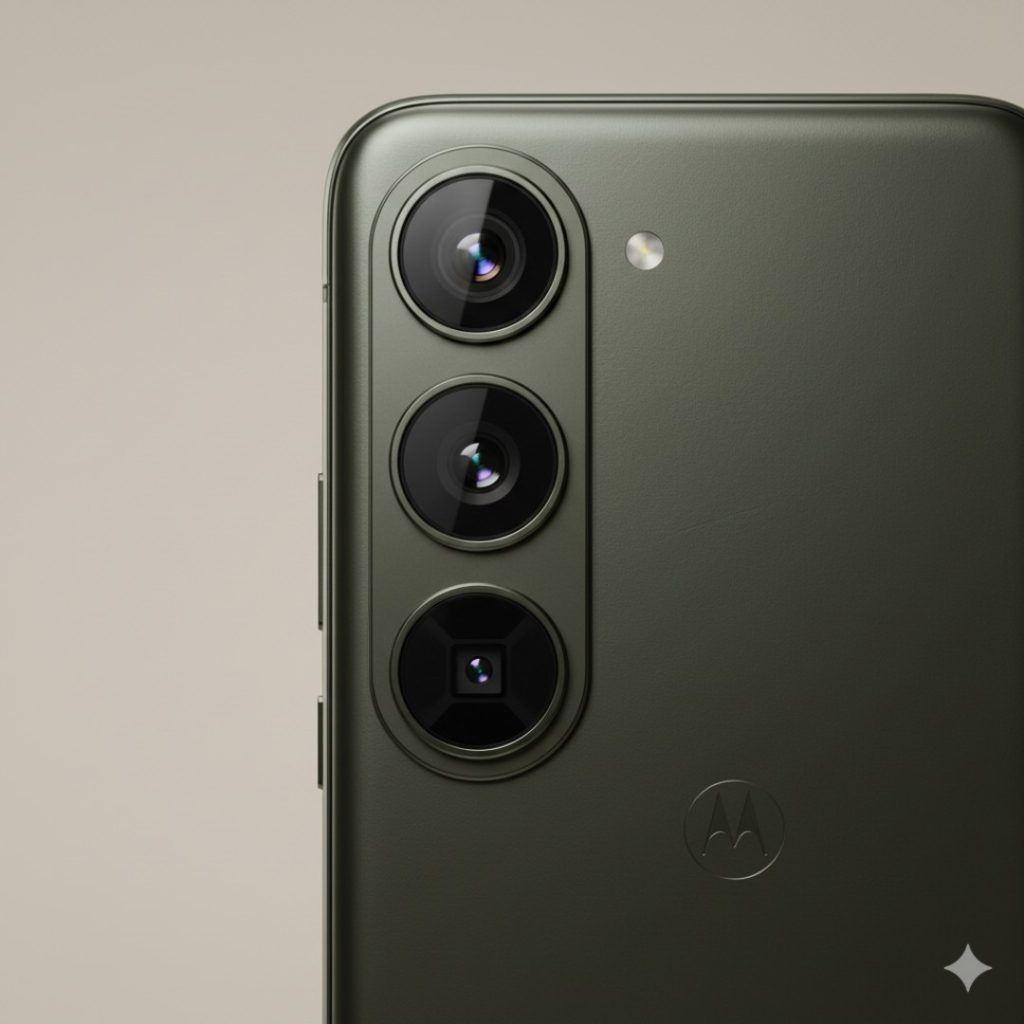
Motorola Edge 70 Camera Module in the Bronze Green color.
BATTERY & ENDURANCE
The biggest question mark over the Edge 70 was always the battery. How do you fit enough juice into a 5.99mm body?
Motorola used a 5000mAh Silicon-Carbon battery. This newer tech allows for higher energy density in a smaller form factor compared to traditional Li-ion.
Charging & Drain Test Results
Charging Speed: The phone comes with a 68W TurboPower charger in the box. Our test results:
0-50%:18 minutes.
0-100%: 48 minutes.This is exceptionally fast and easily beats most of the competition in this segment.
Wireless Charging: The inclusion of 15W Wireless Charging is a huge premium feature that many rivals skip at this price point. It adds fantastic convenience.
Battery Drain Test:
Heavy Gaming (1 hr): ~15% drain.
Streaming 1080p Video (1 hr): ~8% drain.
Overall Endurance: In my mixed-use scenario (social media, calls, web browsing, moderate photography), the 5000mAh cell easily lasted 1.5 full days (around 30 hours). Even with a couple of hours of gaming, it comfortably gets you through a full 16-hour day with 15-20% left.
The Verdict: Motorola has truly broken the curse of the slim phone. The battery life is not a compromise; it’s an advantage.
THE COMPETITION (Auto-Selected Rivals)
The Motorola Edge 70, priced around ₹29,999, competes directly with some heavy hitters in the Indian market. The top contenders are those that offer a more performance-focused or a more feature-rich experience.
Motorola Edge 70 vs Samsung Galaxy S25 FE vs Nothing Phone (3a)
Based on the market segment (premium mid-range/affordable flagship) and features, the strongest current trending competitors are:
Rival 1: Samsung Galaxy S25 FE (Fan Edition): The all-rounder with excellent software and a versatile camera.
Rival 2: Nothing Phone (3a): The style-conscious, clean-Android alternative known for its unique design and value proposition.
Feature
Motorola Edge 70 (₹29,999)
Samsung Galaxy S25 FE (Est. ₹32,999)
Nothing Phone (3a) (Est. ₹23,078)
Processor
Snapdragon 7 Gen 4 (4nm)
Exynos 2400 (4nm)
Snapdragon 7s Gen 3
Design/Thickness
5.99mm (Ultra-Slim)
~7.9mm (Standard)
~8.3mm (Standard)
Peak Brightness
4500 Nits
1750 Nits
~1300 Nits
Durability
IP68/IP69 + MIL-STD
IP68
IP54
Wireless Charging
Yes (15W)
Yes (15W)
No (Wired only)
Camera Zoom
20x Digital Only
3x Optical Telephoto
2x Digital Only
UI Experience
Near-Stock Android 16
Samsung One UI
Nothing OS (Clean)
Software Update Promise
3 OS + 4 Years SMR
7 Years OS + 7 Years SMR
3 OS + 4 Years SMR
Analysis and Winner
If Performance is Key: The Samsung Galaxy S25 FE wins, hands down. The Exynos 2400 (or regional Snapdragon 8 Gen 3) is a flagship-class processor that offers far superior performance for gaming and heavy editing. Samsung also offers a seven-year software update promise, which is unbeatable.
If Value and Clean UI is Key: The Nothing Phone (3a) offers incredible value. While its specs are a step down, its unique design, clean OS, and much lower price make it the smart budget pick.
If Design and Premium Experience is Key: The Motorola Edge 70 is the clear winner here. Its 5.99mm, 159g design, coupled with IP68/IP69 and MIL-STD durability, a better-than-FHD display, and wireless charging, provides a truly premium, thin-and-light experience that neither competitor can match. It successfully blends high-end style with solid mid-range performance and great battery life.
Overall Winner: It depends entirely on your priority.
For the Power User/Gamer:Samsung Galaxy S25 FE.
For the Style/Design Enthusiast:Motorola Edge 70.
FINAL VERDICT
The Motorola Edge 70 is not a phone for everyone, but for its intended audience, it is a triumph. It’s an elite fashion statement that doesn’t completely gut the core functionality of a modern smartphone. Motorola set out to make an ultra-slim phone without serious compromise, and they mostly succeeded.
Buy it if:
You want the lightest, thinnest phone on the market that still has a great battery. The 5.99mm/159g profile is truly revolutionary for the price.
You value a premium experience with features like 15W Wireless Charging, IP68/IP69 rating, and a 4500 Nits, Pantone-validated display.
Your primary camera is your main shooter. The 50MP OIS main camera and the 50MP Ultrawide with Macro Autofocus are exceptional.
Skip it if:
You are a dedicated mobile gamer who needs flagship-level performance (Snapdragon 8 Gen series). The 7 Gen 4 is great, but not the best for extreme workloads.
You rely on optical zoom. The lack of a telephoto lens is a serious downgrade for those who need to zoom in without losing quality.
You want the absolute best value for money. The Nothing Phone (3a) offers a slightly better value proposition at a lower price, while the S25 FE offers more performance for a little more money.
The Google Pixel series has always been like that brilliant but unreliable friend. Amazing photos, smart features, but plagued by heating issues and weak battery life. But with the Pixel 10 Pro, Google claims to have fixed everything.
Released back in August 2025, the Pixel 10 Pro brings the biggest shift in Google’s history: the move to the Tensor G5 chip, built by TSMC (the same folks who make Apple’s chips). No more Samsung Exynos DNA.
But after 4 months of rigorous testing in Indian conditions—from the humidity of Mumbai to the traffic jams of Bangalore—does it hold up? Let’s dive deep.
Google Pixel 10 Pro (Obsidian Black) resting on a wooden table next to a cup of coffee.
Quick Specs: The Numbers Game
Before we get into the experience, here is what you are paying for.
Feature
Specification
Processor
Google Tensor G5 (3nm TSMC)
RAM/Storage
16GB LPDDR5X
Display
6.3-inch Super Actua LTPO OLED (1-120Hz)
Peak Brightness
3,000 Nits
Rear Cameras
50MP Main + 48MP UW + 48MP Telephoto (5x)
Front Camera
42MP Ultrawide Selfie
Battery
4,870 mAh (with 45W Charging)
OS
Android 16 (7 Years of Updates)
Starting Price
₹1,09,999 (Ex-Showroom/MRP)
2. Design & In-Hand Feel: Premium but Familiar
Google hasn’t reinvented the wheel here, they’ve just polished it. The iconic “Camera Bar” is still here, but it’s now a floating island rather than a visor connecting to the frame.
Build Quality: The matte glass back feels luxurious and refuses to catch fingerprints. The polished aluminum rails scratch easily (use a case!).
Size Factor: The 6.3-inch size is the “Goldilocks” size for Indian hands. It’s manageable in one hand while stuck in a crowded Metro, unlike the massive S25 Ultra.
Close-up macro shot of the Google Pixel 10 Pro camera bar showing the three lenses
The “Engine”: Tensor G5 Performance
This is the section everyone is waiting for. For years, Pixels heated up like a toaster.
The TSMC Difference:
The new Tensor G5 is built on the 3nm process. In my testing, the difference is night and day compared to the Pixel 9.
Gaming: I played BGMI and Genshin Impact at ‘High’ settings. The frame drops are gone. It gets warm, but not hot.
Daily Use: Apps open instantly. The “Micro-stutters” while scrolling Twitter (X) or Reddit are history.
Is it faster than the iPhone 17 Pro?
Raw benchmarks? No. The A19 Pro still smokes it in numbers. But in real life? You won’t feel the difference.
Brightness: With 3,000 nits peak brightness, reading Google Maps under the harsh Delhi noon sun is no problem.
Speakers: The stereo separation is excellent, though slightly less bass-heavy than the iPhone.
[IMAGE PROMPT]:Front view of Google Pixel 10 Pro displaying a vibrant, colorful abstract wallpaper. Bezel-less look. Dark background to emphasize screen pop. NO TEXT.
Camera: Still The King of Stills?
Google’s computational photography is legendary. The Pixel 10 Pro introduces the “Cinematic Rendering Engine.”
The Rear Setup
Main Sensor (50MP): Contrast is heavy. It gives you that “moody,” dramatic Pixel look. Unlike Samsung, which brightens shadows unnaturally, the Pixel embraces the dark.
5x Telephoto: This is the star. At 10x and even 30x, the AI cleans up the image so well it looks optical.
Video: Finally, video quality is “iPhone-grade.” The 4K/60fps footage is smooth, and the jitter when panning is gone.
AI Magic
“Add Me”: Take a group photo, hand the phone to a friend, and step in. The phone merges both shots so everyone is in the picture. It works flawlessly.
Magic Editor: You can now move people in the photo or change the weather background entirely. It feels like cheating, but it’s fun.
Real World “Mileage”: Battery Life
In the automobile world, we ask “Kitna deti hai?” (What’s the mileage?). In the phone world, it’s Screen On Time (SOT).
Claimed: “All Day Battery” (24+ hours).
Real World (Indian Usage):
Heavy Day: (5G On, Navigation for 1 hour, Camera use, YouTube): 6.5 to 7 Hours SOT.
Light Day: (Wi-Fi, Social Media): 8+ Hours SOT.
Charging Speed:
This is where Google falls behind. The 45W charging takes about 70 minutes for 0-100%. Comparing this to the OnePlus 13 (which charges in 25 mins) feels painful.
The Competition: Rival Analysis
Let’s look at the auto-detected rivals for the ₹1 Lakh+ segment.
Google Pixel 10 Pro vs. iPhone 17 Pro vs. Samsung Galaxy S25 Ultra
Feature
Pixel 10 Pro
iPhone 17 Pro
Samsung S25 Ultra
Processor
Tensor G5 (Smartest)
A19 Pro (Fastest)
Snapdragon 8 Elite (Balanced)
Zoom
5x Optical (Great AI)
5x Optical
10x Optical (King of Zoom)
OS
Android 16 (Clean)
iOS 19 (Polished)
OneUI 7 (Feature Rich)
Price (approx)
₹1,09,999
₹1,34,900
₹1,24,999
Winner?
Value: The Pixel 10 Pro is cheaper than both rivals.
Video: iPhone still wins slightly.
Productivity: S25 Ultra (S-Pen is unbeatable).
Photography: Pixel 10 Pro (Best for point-and-shoot).
Final Verdict: Should You Buy It?
The Pixel 10 Pro is the phone Google should have released three years ago. The TSMC chip solves the heating and battery anxiety.
Buy it if:
You want the best still camera: Nothing beats the Pixel’s shutter reliability.
You love clean software: No bloatware, just pure Google smarts.
You want a compact flagship: The 6.3-inch size is perfect for one-handed use.
Skip it if:
You are a hardcore gamer: The Snapdragon 8 Elite (in Samsung/OnePlus) is still better for 3-hour gaming marathons.
You need fast charging: Waiting 1+ hour for a full charge is annoying in 2025.
The Samsung Galaxy Z Fold 7, released in July 2025, represents a significant evolutionary leap in the world of foldable smartphones. It sheds the bulk of its predecessors, brings a game-changing camera upgrade, and solidifies Samsung’s dominance by introducing the thinnest and lightest book-style foldable to date.
Key Specifications at a Glance
Feature
Specification
Processor
Snapdragon 8 Elite for Galaxy (Optimized 3nm chip)
Android 16 with One UI 8 & Extended 7-Year Update Policy
Revolutionary Display & Hinge Technology
The core innovation of the Z Fold 7 lies in its refined structure, making it a true pocketable device.
The Hinge and Design
Ultra-Thin Profile: The Z Fold 7 measures an astonishing 4.2 mm when unfolded (thinner than most non-folding flagships) and 8.9 mm when folded. At just 215g, it is significantly lighter than its predecessor (Z Fold 6 was 239g).
Armor FlexHinge: Samsung’s new butterfly hinge mechanism is certified to withstand 500,000 folds. More importantly, it dramatically reduces the visual crease. When viewed head-on, the crease is nearly invisible, a monumental achievement that finally brings the inner display closer to a standard tablet experience.
IP48 Rating: The phone retains the IP rating, offering resistance against dust (IP4x) and water immersion (IPx8), ensuring durability against everyday elements.
The Displays
Cover Screen: The 6.5-inch Dynamic AMOLED 2X Cover Display has been tweaked to a wider 21:9 aspect ratio. This makes typing and single-handed use feel more natural, addressing a major complaint from previous generations.
Inner Screen: The main foldable display is a vibrant 8.0-inch Dynamic AMOLED 2X panel. With 120Hz adaptive refresh rate and a peak brightness of 2600 nits, it offers superb colour accuracy and visibility, even in bright sunlight. The screen also uses UTG (Ultra-Thin Glass) that is reportedly 50% thicker for enhanced durability.
Camera System: The 200MP Upgrade
Samsung has finally addressed the camera gap between the Fold series and the flagship S Ultra series.
200MP Main Sensor: The Z Fold 7 features a powerful 200MP Wide-angle primary sensor (with OIS), a direct carryover from the Galaxy S Ultra lineage. This delivers incredible detail, superior low-light performance (via 16-in-1 pixel binning), and finally puts the Fold on par with the best traditional flagships.
Triple Lens Setup: It is supported by a 12MP Ultra-wide and a 10MP Telephoto lens with 3x optical zoom (OIS).
ProVisual Engine: Image processing is enhanced by the latest version of Samsung’s ProVisual Engine, which leverages the Snapdragon 8 Elite’s NPU for real-time noise reduction, superior scene analysis, and 10-bit HDR+ video capture.
Selfie Cameras: It retains the serviceable 10MP Cover Camera and the 10MP Under Display Camera (UDC) on the inner screen.
Multitasking, Performance, and Galaxy AI
Performance
The Z Fold 7 is powered by the Snapdragon 8 Elite for Galaxy chipset, fabricated on a 3nm process. This processor is an optimized, high-frequency variant of the flagship Snapdragon chip, ensuring flawless performance for intense gaming, seamless app switching, and highly efficient Galaxy AI processing.
One UI 8 (Android 16): The device launches with Android 16 and Samsung’s One UI 8, bringing deeper optimization for the large screen.
Flex Mode & Taskbar: The enhanced Taskbar is now more intuitive, and the device supports advanced Flex Mode controls.
Galaxy AI Integration: AI is central to the Fold 7 experience. Features like Gemini Live (real-time translation), Generative Edit (advanced photo manipulation), and Sketch to Image utilize the massive inner display for a more immersive and productive workflow, allowing you to run three apps concurrently with AI assistance.
Battery Life & Charging
While significant improvements were made in every other area, the battery capacity remains conservative.
Capacity: The Z Fold 7 retains the 4,400mAh dual battery. Given the new, ultra-thin design and larger 8.0-inch screen, maintaining this capacity is a feat of engineering.
Endurance: Despite the same capacity, the highly efficient Snapdragon 8 Elite (3nm) chipset and LTPO display technology lead to better battery life than the Fold 6, typically lasting a full day under moderate-to-heavy usage.
Charging: Charging speeds are limited to 25W wired (50% charge in about 30 minutes) and 15W wireless, which is a key area where Samsung lags behind some competitors.
Pros & Cons
✅ Pros
❌ Cons
Groundbreaking Design: Thinnest (4.2 mm) and lightest (215g) Fold yet.
Battery/Charging Stagnation: Only 4,400mAh with slow 25W charging.
Near-Invisible Crease: Major hinge improvement.
Price remains in the ultra-premium segment.
Flagship Camera: Massive leap to a 200MP main sensor.
The Under Display Camera (UDC) is still noticeable under certain light.
Wider Cover Screen: 21:9 aspect ratio makes it much more usable.
S Pen is not natively stored inside the chassis.
Snapdragon 8 Elite for unmatched performance and AI.
Price in India
The Samsung Galaxy Z Fold 7 remains an ultra-premium flagship device, with the following official launch prices in India:
Variant
Price in India (INR)
12GB RAM + 256GB Storage
₹1,74,999
12GB RAM + 512GB Storage
₹1,86,999
16GB RAM + 1TB Storage
₹2,10,999
Final Verdict: The Samsung Galaxy Z Fold 7 is not just an iteration; it’s a statement. By successfully tackling the thickness, weight, and camera issues, Samsung has perfected the book-style foldable. While the battery capacity is a missed opportunity, the revolutionary design and 200MP camera make the Z Fold 7 the undisputed benchmark for foldable technology in 2025.
The OnePlus 15R marks the biggest generational leap for the brand’s performance-focused “R” series. Scheduled for launch on December 17, 2025, this device integrates several core flagship features from the premium OnePlus 15 into a more accessible package. It is perfectly tailored for users who demand unmatched gaming performance and extraordinary, long-lasting battery life.
Full Specifications at a Glance
Feature
Details (Confirmed by OnePlus/High-Confidence Leak)
The main selling point of the OnePlus 15R is its powerhouse processor: the Qualcomm Snapdragon 8 Gen 5.
Chipset Advantage: The new “Gen 5” chip makes its global debut on the OnePlus 15R. (Note: This is an underclocked version of the Snapdragon 8 Elite Gen 5 used in the flagship OnePlus 15, which is expected to offer better thermal control.)
Gaming Experience: The 15R pairs this powerful chip with a 165Hz AMOLED Display, a dedicated Touch Response Chip, and a G2 Wi-Fi Chip. This translates to:
Smoothness: Ultra-low touch latency and confirmed support for Always-on 120FPS in demanding titles like BGMI and CoD.
Connectivity: Enhanced network stability and lower ping for competitive gaming.
Performance Rating: Antutu Benchmarks for this chip are expected to cross the 2.5 Million mark, cementing its position in the flagship-killer league.
Heating Test & Thermal Management (A Critical Look)
Given the high performance of the Snapdragon 8 Gen 5, thermal management is paramount. Read More: Lava Agni 4 5G
Cooling System: OnePlus claims to utilize an advanced Glacier Cooling System featuring a high-volume Vapor Chamber and Supercritical Aerogel layers.
Heating Scenario (Expected):
Flagship Precedent: The flagship OnePlus 15 (with the Elite Gen 5 chip) faced initial reports of extreme heat during heavy load.
15R’s Situation: Since the 15R uses the non-Elite Snapdragon 8 Gen 5, which naturally consumes less peak power, less heating is anticipated.
Real-World Expectation: The phone will get moderately warm (around 42-44°C) during heavy, continuous gaming at 165Hz for 30 minutes. However, thermal shutdown or extreme throttling, as seen in some early Gen 5 samples, is unlikely due to the refined cooling.
Conclusion: The phone is expected to remain cool during regular use, offering excellent performance stability for power users.
Battery Life & Charging
The OnePlus 15R’s battery is arguably its most compelling feature.
Battery Capacity: A huge 7,400mAh battery, surpassing the capacity of the flagship OnePlus 15 model (7,300mAh).
Longevity: Utilizing Silicon Nanostack technology, the company guarantees that the battery will retain 80% of its capacity even after 4 years of usage.
Charging Speed:80W SUPERVOOC wired fast charging. (Expected time: 0 to 100% in approximately 40-45 minutes).
Verdict: This combination should easily deliver two-day battery life under moderate usage, making it a best-in-class choice for battery efficiency.
Camera Performance
OnePlus has integrated flagship-level computational features while keeping the sensor count focused.
Rear Setup: A practical Dual Camera setup (50MP Primary with OIS + 8MP Ultra-wide expected).
Imaging Engine: The inclusion of the flagship DetailMax Engine. This new processing engine promises high-resolution details, superior dynamic range, and enhanced low-light performance (via the Clear Night Engine).
Video Recording: The support for 4K@120fps video recording in this price segment is a major highlight, pushing it into flagship-grade video territory.
Front Camera: A 32MP Selfie Camera featuring Autofocus (AF). The addition of AF in the ‘R’ series is a significant upgrade for vloggers and users seeking sharp, detailed selfies.
Pros & Cons (Final Verdict)
✅ Pros (Why Buy?)
❌ Cons (What’s Missing?)
Unmatched Performance: Snapdragon 8 Gen 5 chip.
Expectedly No Wireless Charging support.
Massive Endurance:7,400mAh exceptional battery life.
Limited to a Dual camera setup, not Triple.
Top-Tier Display: 165Hz AMOLED.
The presence of the Alert Slider is doubtful.
Flagship Video: 4K@120fps recording support.
Display resolution is 1.5K, not pure 2K/QHD.
IP66/IP68 rating (water & dust resistance).
Price in India & Availability
Expected Price: ₹44,999 – ₹49,999 (Base Variant)
Launch Date: December 17, 2025
Variants:Charcoal Black, Mint Green, and the exclusive Electric Violet (Ace Edition).
Final Takeaway
The OnePlus 15R is positioned to be the Ultimate Performance and Battery Flagship Killer of the year. If your primary needs are extreme performance, competitive gaming, and multi-day battery life, this phone is arguably the best purchase you can make in 2025.
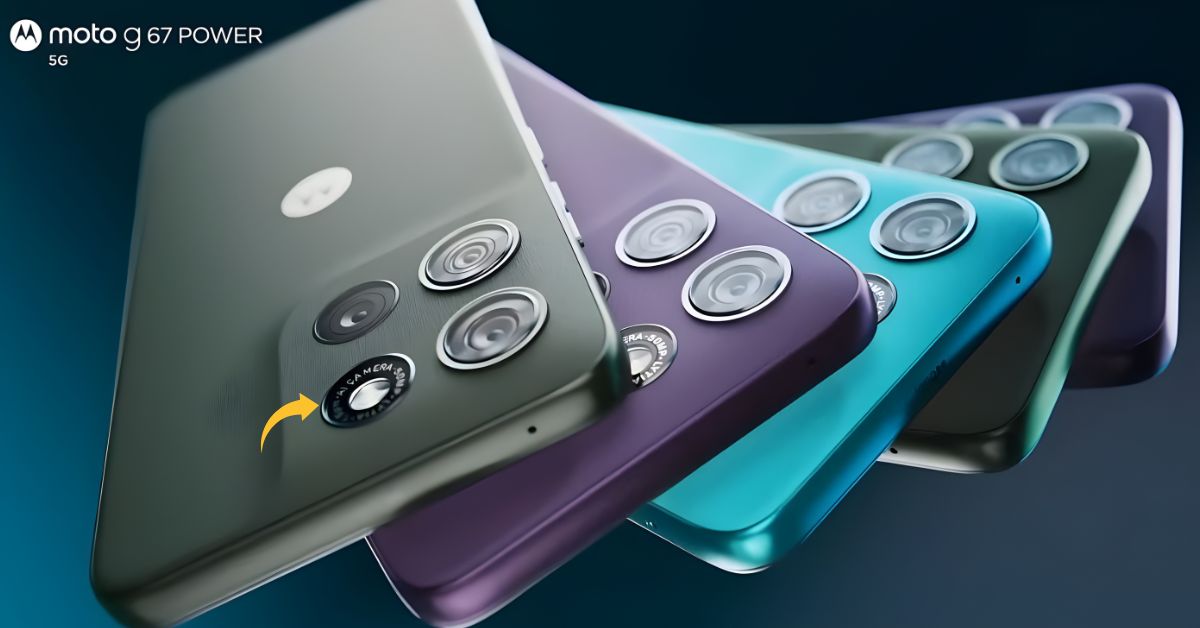
The Moto G67 Power 5G is Motorola’s definitive statement in the fiercely contested sub-₹17,000 segment in late 2025. True to its “Power” moniker, the device is centered around an industry-leading battery, but it also elevates the entire budget experience with a premium vegan leather finish, a surprisingly capable camera system, and a robust, military-grade durable build. Launched in India on November 5, 2025, the Moto G67 Power 5G is engineered to be the ultimate endurance champion that doesn’t compromise on style or essential modern performance.
This detailed review dissects the confirmed specifications of the Moto G67 Power 5G, analyzing the real-world performance of its Snapdragon processor, the immense longevity of its 7000mAh battery, and its highly competitive pricing that makes it a top contender in the budget 5G segment.
Specifications and Design: Premium Durability and Style
The Moto G67 Power 5G stands out immediately with its Pantone-curated vegan leather back, a feature rarely seen at this price point. This premium finish not only enhances its aesthetic appeal but also provides a better grip and improved durability compared to standard plastic.
The device is built to last, boasting the following durability credentials:
Protection:Corning Gorilla Glass 7i on the front, offering superior scratch and drop resistance.
Ruggedness: Passed MIL-STD-810H military-grade tests, confirming its resistance to shock, vibration, and extreme temperatures.
Rating:IP64 rating for dust and water resistance (protection against splashes from any direction).
The phone runs on a clean, near-stock Hello UX based on Android 15, with a guaranteed upgrade to Android 16 and a promise of three years of security patches.
Dual Stereo Speakers with Dolby Atmos, 3.5mm Headphone Jack
Battery Life and Charging: The Unmatched 7000mAh Titan
The cornerstone of the Moto G67 Power 5G is its enormous 7,000mAh battery, utilizing Silicon Carbon Technology to achieve a massive capacity within a relatively slim 8.6mm profile.
Endurance: This capacity is unparalleled in its segment, eliminating battery anxiety entirely. Motorola claims the battery can deliver up to 58 hours of usage on a single charge. Real-world testing confirms that even heavy users will consistently achieve two full days of usage, with moderate users pushing well into a third day. The PCMark Work 3.0 battery test score is exceptionally high, cementing its position as the endurance king.
Charging: Recharging the 7000mAh cell is handled by 33W Fast Charging. While 33W is not the fastest speed on the market, it is essential for a battery of this size, taking the phone from 0% to 100% in approximately 1.5 to 2 hours. Motorola has included intelligent charging features (Battery Care 2.0) to maintain the long-term health of this giant cell.
Performance and Gaming: Stable Snapdragon 7s Gen 2
The Moto G67 Power 5G is powered by the Qualcomm Snapdragon 7s Gen 2 chipset (4nm). This processor, while focused on efficiency, provides a robust platform for smooth daily performance and reliable gaming.
Daily Performance: The processor, combined with 8GB of LPDDR4X RAM and UFS 2.2 storage, handles everyday tasks, multitasking, and app switching with high fluency. The 120Hz display ensures the user interface feels exceptionally smooth.
Gaming: The Snapdragon 7s Gen 2 is capable of running demanding titles like BGMI and Call of Duty: Mobile on medium-to-high graphics settings at stable frame rates (around 45-60 FPS). While it does not deliver the peak performance of higher-tier chipsets, its thermal management is effective, keeping the phone relatively cool and preventing severe throttling, ensuring sustained gaming sessions are possible. The phone achieves a respectable AnTuTu v10 score of over 840,000.
Camera Quality: 4K Recording Across All Lenses
Motorola has equipped the Moto G67 Power 5G with a camera setup that focuses on high-resolution video versatility—a unique selling point in this price segment.
Primary Sensor: A 50MP Sony LYTIA™ 600 sensor ($f/1.8$ aperture), which provides excellent clarity, color accuracy, and rich detail in daylight. The sensor utilizes Quad Pixel technology for improved low-light performance.
Ultra-Wide/Macro: An 8MP ultrawide sensor ($f/2.2$ aperture) that doubles as a macro lens.
Selfie Camera: A high-resolution 32MP front camera ($f/2.2$ aperture).
Video Capability: Uniquely, the Moto G67 Power 5G supports 4K video recording at 30fps from ALL three cameras (Main, Ultrawide, and Front). This level of video quality and consistency is unprecedented in the sub-₹17,000 price segment and is a huge win for content creators and vloggers.
While the primary camera is strong, the 8MP ultrawide can show signs of softness and reduced dynamic range compared to the main sensor. The inclusion of moto ai features like Auto Night Vision and AI Photo Enhancement helps improve overall image quality computationally.
Display and Multimedia
The visual experience is delivered by a 6.7-inch FHD+ IPS LCD display with a fluid 120Hz refresh rate. While it is not an AMOLED panel, it features a high brightness mode of 1050 nits, ensuring good visibility even in bright outdoor conditions. Audio is enhanced by dual stereo speakers tuned with Dolby Atmos and includes the highly sought-after 3.5mm headphone jack.
LCD Display: Lacks the deep blacks and infinite contrast of AMOLED panels found in some rivals.
Superior Video Quality: Segment-exclusive 4K video recording support from all three cameras.
Slower Charging: 33W charging is modest for a 7,000mAh battery, leading to longer charge times.
Premium Build: Vegan leather finish, Gorilla Glass 7i, and MIL-STD-810H certification are excellent for the price.
UFS 2.2 Storage: While adequate, the inclusion of UFS 3.1 would have improved performance snappiness.
Snapdragon Performance: Snapdragon 7s Gen 2 offers reliable, stable performance and 5G connectivity.
Bulky Design: At 210g and 8.6mm thick, it is noticeably heavier and thicker than its slim rivals (a necessary compromise for the huge battery).
Clean Software: Near-stock Android experience with guaranteed OS upgrade to Android 16.
Only One OS Upgrade: Motorola’s commitment of only one major OS upgrade (to A16) is a potential con for long-term software support compared to competitors.
Price in India (Confirmed)
The Moto G67 Power 5G was launched in India on November 5, 2025, and is highly aggressively priced to undercut most rivals with its segment-best battery capacity.
The confirmed launch price for the single variant (8GB + 128GB) is:
Variant
Launch Price (Ex-Showroom India)
Effective Launch Price (with Bank Offer)
8GB RAM + 128GB Storage
₹ 15,999
₹ 14,999
The effective price of ₹ 14,999 (with bank discounts) makes the Moto G67 Power 5G one of the best value-for-money smartphones in the entire sub-₹16,000 segment, particularly for users prioritizing battery life and video capability.
Final Verdict: The Endurance Champion
The Moto G67 Power 5G is a specialized device that excels overwhelmingly in its core mission. It is the definitive choice for users who demand unmatched battery life and robust durability at an accessible price. While it compromises with an LCD panel and 33W charging, the sheer utility of the 7,000mAh battery, the reliability of the Snapdragon 7s Gen 2, and the segment-first 4K video recording from all three cameras make it an incredibly compelling and unique offering in the Indian market in 2025.
The Lava Agni 4 5G, launched in November 2025, represents the Indian brand’s most formidable challenge yet to the established mid-range competitors from China and South Korea. Positioned strategically in the competitive sub-₹30,000 segment, the Agni 4 is engineered to disrupt by focusing on three key premium metrics: flagship-level chipset performance, high-speed storage, and a superior AMOLED display. Lava has not only elevated the hardware but also bolstered its software promise, making the Agni 4 a serious contender for users who prioritize raw power and a clean, bloat-free experience.
This detailed review dissects the now-confirmed specifications of the Lava Agni 4 5G, analyzing the real-world performance of its Dimensity 8350 chipset, the quality of its dual high-resolution cameras, and its true value proposition at the retail price in India.
Specifications and Design: Premium Build Meets Next-Gen Internals
TheLava Agni 4 5G makes a strong first impression with a premium build that belies its price point. It features an aluminium alloy frame and a Matte AG Glass back, giving it a refined, tactile feel typically associated with higher-end flagships. The design is sleek, with a minimal 1.7mm slim bezel around the display and a manageable thickness of 8.6mm. It is protected by Corning Gorilla Glass 5 and carries an IP64 rating for dust and splash resistance, offering reliable daily durability. A notable physical feature is the customizable Action Key, which can be programmed for various shortcuts.
The internal hardware is the true story of disruption:
Processor: The phone is powered by the MediaTek Dimensity 8350 5G chipset (4nm fabrication), a high-performance engine clocked up to 3.35 GHz. This processor is a significant leap forward, achieving an AnTuTu score exceeding 1.4 million, firmly placing the Agni 4 in the high-performance category.
RAM/Storage: The device comes in a single configuration of 8GB LPDDR5X RAM and 256GB UFS 4.0 storage. The inclusion of UFS 4.0—the fastest mobile storage standard—is highly aggressive for this price segment, guaranteeing lightning-fast app launch times and file transfer speeds.
Software: The Agni 4 runs on a near-stock Android 15 operating system, entirely free of bloatware and pre-installed third-party apps, upholding Lava’s commitment to a clean user interface. Lava also promises three years of major Android OS updates and four years of security patches, offering exceptional longevity.
Key Specifications (Confirmed)
Detail
Processor
MediaTek Dimensity 8350 (4nm, up to 3.35 GHz)
Display
6.67-inch 1.5K AMOLED, 120Hz, 2400 nits Peak
Rear Camera
50MP (OIS) + 8MP (Ultrawide)
Front Camera
50MP AI Selfie Camera (EIS)
RAM/Storage
8GB LPDDR5X, 256GB UFS 4.0
Battery/Charging
5,000mAh, 66W Fast Charging
Durability
Aluminium Frame, IP64 Rating
Display Quality: The 1.5K AMOLED Spectacle
The visual experience on the Lava Agni 4 5G is a major competitive advantage. It features a sharp 6.67-inch AMOLED screen with a 1.5K+ resolution ($1220 \times 2712$ pixels), providing a crisp pixel density of 446 PPI.
Fluidity and Brightness: The 120Hz refresh rate ensures exceptional fluidity, complemented by an impressive peak brightness of 2400 nits. This brightness ensures usability and clarity even under direct Indian sunlight.
Color Depth: The display supports 10-bit color depth, enabling the reproduction of over 1 billion colors, which makes streaming and HDR content consumption vibrant and lifelike.
Immersion: The display features ultra-thin 1.7mm bezels, maximizing the screen-to-body ratio for an immersive viewing experience, further supported by dual stereo speakers.
Camera Quality: OIS and Dual High-Res Sensors
The camera system on the Lava Agni 4 5G offers high-resolution clarity across both the front and rear, focusing on sharp stills and high-quality video capabilities.
Rear Camera: A dual setup featuring a 50MP primary sensor with a large $1/1.55$-inch sensor size and Optical Image Stabilization (OIS). This inclusion of OIS is crucial for capturing detailed, blur-free low-light photos and rock-steady video. It supports high-end 4K video recording at 60fps. The secondary lens is an 8MP ultrawide sensor (112° FOV).
Front Camera: A high-resolution 50MP AI Selfie Camera that also supports 4K video recording at 60fps with EIS (Electronic Image Stabilization). This is a rare and powerful feature in this segment, making the Agni 4 an excellent device for vloggers and video content creators.
In daylight, the main 50MP camera delivers crisp, detailed binned photos. While some early reviews noted occasional color inconsistencies and weak dynamic range compared to rivals, the inclusion of OIS, 4K/60fps video, and Lava’s new Vayu AI photo editor (featuring AI Elimination and Image Generation tools) makes the overall camera package highly versatile and competent.
Performance is arguably the strongest point of the Lava Agni 4 5G. The MediaTek Dimensity 8350, paired with UFS 4.0 and LPDDR5X RAM, ensures a true high-performance experience.
Benchmark Power: The AnTuTu score exceeding 1.4 million puts the Agni 4 firmly in the category of phones that can easily run demanding AAA mobile games.
Gaming Experience: Titles like BGMI and Call of Duty Mobile run smoothly on Very High graphics settings at stable frame rates (often reaching the high-frame-rate modes).
Thermal Management: Lava has included a large 4,300mm² Vapour Chamber (VC) cooling system and a dedicated Game Booster Mode. While some early reports noted the device heats up under extreme stress, the VC cooling is generally effective at maintaining sustained performance and preventing severe thermal throttling over typical 30-minute gaming sessions.
The Lava Agni 4 5G is a highly capable and affordable gaming machine, a clear testament to the power of the Dimensity 8350 chipset.
Battery Life and Charging Speed
The Lava Agni 4 5G is equipped with a standard 5,000mAh battery. While not the largest capacity available in the mid-range (some competitors offer 6,000mAh or 7,000mAh), the battery life is optimized by the efficient 4nm Dimensity 8350 chipset.
Endurance: Users can comfortably expect a full day of heavy usage and a day and a half with moderate use, achieving decent screen-on times.
Fast Charging: Recharging is handled by 66W Super-Fast Charging. This is highly efficient, capable of reaching 50% charge in just 19 minutes and a full charge in approximately 51 minutes. This fast charging speed compensates effectively for the moderate battery capacity.
Pros & Cons
Pros
Cons
Flagship-Grade Internals: Dimensity 8350, UFS 4.0, and LPDDR5X RAM offer unmatched speed for the price.
Average Ultrawide Camera: The 8MP ultrawide and overall color tuning lack the consistency of some rivals.
Superior Display: 1.5K AMOLED, 120Hz, and 2400 nits peak brightness are best-in-class features.
IP64 Rating Only: The rating offers splash resistance but not the full water immersion protection (IP68) of some rivals.
Clean Software: Near-stock Android 15 with zero bloatware and a strong 3/4-year update promise.
5,000mAh Battery: Capacity is adequate but not segment-leading; charging speed is its saving grace.
4K@60fps Video: High-resolution video available on both the 50MP front and rear cameras.
No MicroSD/Headphone Jack: Lacks both expandable storage and the 3.5mm audio jack, which budget users often prefer.
Premium Build: Aluminium frame and AG Glass back give a high-end in-hand feel.
Inconsistent HDR/Tuning: Some reviews note the camera’s HDR and color tuning can be inconsistent across different lighting conditions.
Price in India (Confirmed)
The Lava Agni 4 5G was launched in India on November 20, 2025, in a single configuration, utilizing an aggressive pricing strategy.
Variant
Ex-Showroom Price in India
Effective Price (with Launch Offer)
8GB RAM + 256GB Storage
₹ 24,999
₹ 22,999 (with ₹2,000 bank discount)
The effective price of ₹ 22,999 positions the Lava Agni 4 5G as a direct and immediate competitor to the highly popular OnePlus Nord CE series and the Samsung Galaxy A5x lineup. This pricing is highly competitive for a phone offering UFS 4.0 storage and a Dimensity 8350 chipset.
Final Verdict: The Indian Performance King
The Lava Agni 4 5G is a stunning return to form and a bold technological statement from Lava. It is built for the user who values sustained performance and a clean software experience above all else. The unbeatable combination of the Dimensity 8350, UFS 4.0 storage, 1.5K AMOLED display, and a 50MP OIS-enabled camera at its effective price makes the Agni 4 a phenomenal value-for-money proposition. While the camera system could use minor software polishing, the sheer power and premium build quality ensure that the Lava Agni 4 5G is the definitive Indian-made performance king of the sub-₹25,000 segment in 2025.
The Vivo X300 is more than just a smartphone; it is Vivo’s decisive answer to the call for a no-compromise, compact flagship in the era of oversized devices. Launched in India on December 10, 2025, the X300 achieves a masterful balance: it integrates an industry-leading camera system, top-tier performance hardware, and an exceptional battery into a chassis that is genuinely comfortable for one-handed use. It is positioned as the definitive choice for users who demand professional-grade photography and all-day endurance without the bulk of a “Pro Max” model.
This detailed, expert review dissects the now-confirmed specifications of the Vivo X300, analyzing the real-world performance of its Dimensity 9500 chipset, the technical prowess of its ZEISS-tuned camera array, and its significant value proposition in the ultra-competitive Indian premium market.
Specifications and Design: Compact Powerhouse with IP69 Rating
The Vivo X300 challenges expectations with its compact size (6.31-inch display) and premium construction. The phone features a flat front, back, and sides, moving away from the curved displays of its predecessors—a design choice prioritizing usability and grip. It boasts a high-end build, certified with both IP68 and IP69 ratings, making it resistant not just to dust and water immersion but also to high-pressure, high-temperature water jets.
The engine room of the X300 is unequivocally flagship-grade:
Processor: The phone is powered by the MediaTek Dimensity 9500 processor (3nm fabrication). This processor is MediaTek’s equivalent to the latest Snapdragon 8 Elite Gen 5, featuring a highly advanced core architecture clocked up to an aggressive 4.21 GHz.
Co-Processor: The performance is augmented by Vivo’s proprietary V3+ Imaging Chip, which handles intense computational photography tasks, freeing the main CPU for seamless multitasking and gaming.
RAM/Storage: Available in configurations up to 16GB LPDDR5X RAM and 512GB UFS 4.1 storage, ensuring lightning-fast application load times and data transfer speeds.
Software: It runs the refined and aesthetically pleasing OriginOS 6 based on Android 16, offering a clean, fluid user interface that critics have praised for its polished animations and stability.
The camera system on the Vivo X300 is its defining strength, built on a versatile and uncompromising triple-lens ZEISS-tuned array:
Primary Sensor: A massive 200MP Samsung HPB sensor ($f/1.68$ aperture) with a large 1/1.4-inch sensor size and Optical Image Stabilization (OIS). This sensor captures incredible detail, relying on advanced pixel-binning for exceptional low-light performance. Photos are noted for their supreme texture details, wide dynamic range, and vibrant (though sometimes slightly saturated in ZEISS mode) colors.
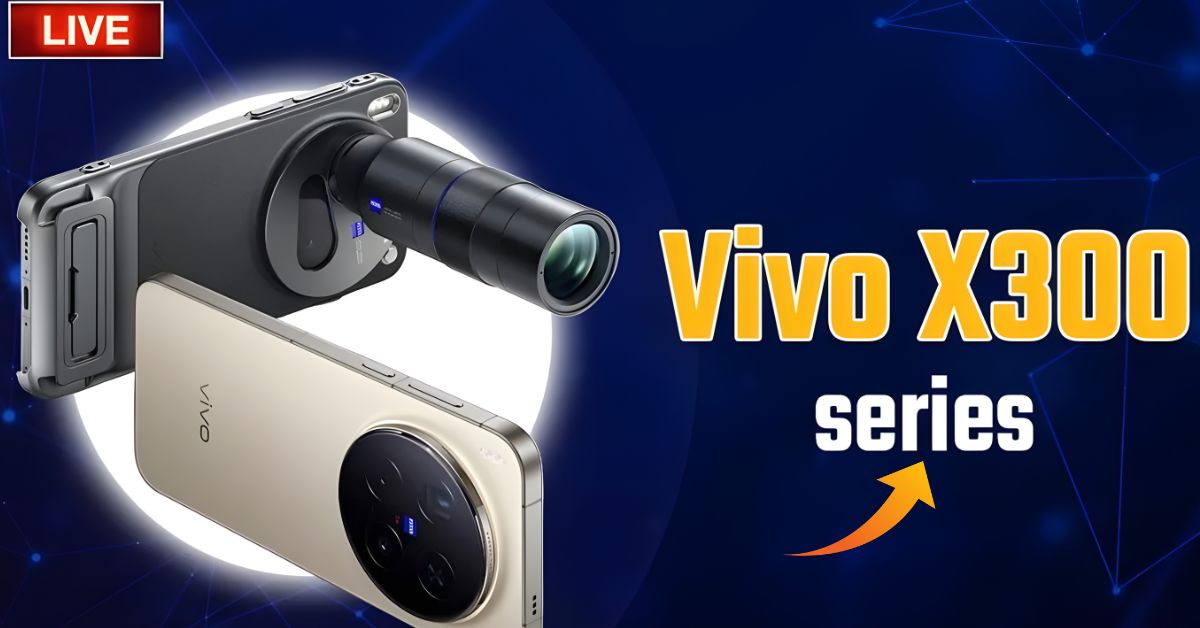
Telephoto Sensor: A 50MP sensor offering 3x optical zoom (70mm equivalent) with OIS and Autofocus. This lens delivers sharp, stable, and naturally separated portrait shots, with the ability to digitally reach 100x magnification. The optional ZEISS 2.35X Extender Kit further pushes optical capability, a unique feature for professional users.
Ultrawide Sensor: A high-resolution 50MP Ultrawide sensor with Autofocus, providing excellent detail and color consistency that aligns well with the main lens.
Front Camera: A 50MP Autofocus front camera is a significant upgrade, delivering consistently sharp, color-accurate selfies and high-quality 4K video recording.
The entire imaging pipeline, managed by the V3+ chip and ZEISS T* coating, ensures controlled highlights, accurate skin tones, and minimal lens flare, cementing the X300’s status as a top-tier photographic tool.
Gaming Performance and Stability
Despite its compact size and photography focus, the Vivo X300 is a highly capable gaming machine, thanks to the Dimensity 9500 chipset and superior thermal engineering.
Performance: The Dimensity 9500 delivers top-tier performance, handling graphically demanding games like CarX Street and BGMI with ease. Users report smooth, fluid frame rates and virtually no UI stutters, even when managing multiple social media apps simultaneously.
Cooling: The phone features a sophisticated Glacier Liquid Cooling System that provides excellent thermal conductivity. Review testing showed the X300 remains remarkably cool even during intense gaming sessions lasting two to three hours. The phone’s ability to remain calm under heavy usage is a significant advantage over many rivals.
The flat display and balanced 190g weight contribute to a comfortable grip during extended gameplay, making the X300 an excellent choice for casual and competitive mobile gamers alike.
The Vivo X300 packs a substantial 6,040mAh battery. While not the absolute largest capacity in the segment (some rivals reach 7,000mAh), the battery’s performance is optimized by the 3nm Dimensity 9500 and the adaptive 120Hz LTPO display.
Endurance: In real-world usage, the 6,040mAh battery comfortably lasts a full day of heavy use and often extends into a second day with moderate usage. The efficiency of the LTPO panel and power management ensures the battery drain is minimal, even with the 120Hz mode active.
Fast Charging: The phone supports extremely fast 90W FlashCharge wired charging, capable of fully replenishing the 6,040mAh battery in approximately 47 minutes.
Wireless Charging: A major new feature for the standard X-series is the inclusion of 40W wireless charging and reverse wireless charging support, providing premium convenience.
Pros & Cons
Pros
Cons
Unmatched Camera System: Triple 200MP+50MP+50MP ZEISS optics with OIS and 3x optical zoom.
Premium Price Tag: The high cost (starting at ₹75,999) places it in the exclusive flagship segment.
Compact Flagship Design: Ergonomic 6.31-inch size with a premium look and comfortable flat design.
No Memory Card Slot: Lacks storage expansion (common on flagships), though UFS 4.1 is very fast.
Exceptional Battery Life: 6,040mAh battery and 90W charging deliver great endurance and speed.
No 3.5mm Headphone Jack: Audio connectivity relies solely on the USB-C port.
Top-Tier Performance: Dimensity 9500 and V3+ chip ensure sustained speed and smooth gaming with minimal heat.
OriginOS Aesthetic: While vastly improved, the software’s unique aesthetic may not appeal to all users.
Ultimate Durability: IP68 and IP69 ratings provide superior dust and water resistance.
Focus on Portraits: Some analysts note the standard model excels at portraits but the Pro model is superior for long-range zoom clarity.
Price in India (Confirmed)
The Vivo X300 was launched in India on December 10, 2025, and is available for purchase across online and offline retail channels. The pricing reflects its ultra-premium, compact flagship status:
Variant
Price in India (Ex-Showroom)
12GB RAM + 256GB Storage
₹ 75,999
12GB RAM + 512GB Storage
₹ 81,999
16GB RAM + 512GB Storage
₹ 85,999
The final on-road price will be slightly higher, including GST, RTO, and insurance. The official launch offers include up to 10% instant cashback on selected bank cards, a V-Upgrade exchange bonus, and No-Cost EMI options.
Final Verdict: The Compact Camera King
The Vivo X300 is the best compact flagship device available in 2025. It successfully challenges the notion that a smaller phone must compromise on features, delivering a revolutionary camera system, exceptional sustained performance, and battery endurance that exceeds many larger rivals. For the discerning user in India who values top-tier photography, premium build quality (IP69), and performance without the discomfort of an oversized device, the Vivo X300 is the uncompromising choice.
The Nothing Phone (3a), launched in March 2025, represents the brand’s decisive move to bring its unique aesthetic and clean software experience to the highly competitive mid-range segment in India. Positioned strategically below the flagship Phone (3), the Phone (3a) is designed for users who prioritize style, usability, and a refined Android experience over raw, uncompromising power. It is a machine built on balance—offering an efficient processor, a surprisingly versatile camera, and robust battery life, all wrapped in that signature semi-transparent design.
This detailed review analyzes the standard Nothing Phone (3a), assessing its core specifications, evaluating the long-term performance of its processor, and determining its true value proposition at its current price in the Indian market as of late 2025.
Specifications and Design: The Transparent Aesthetic with Purpose
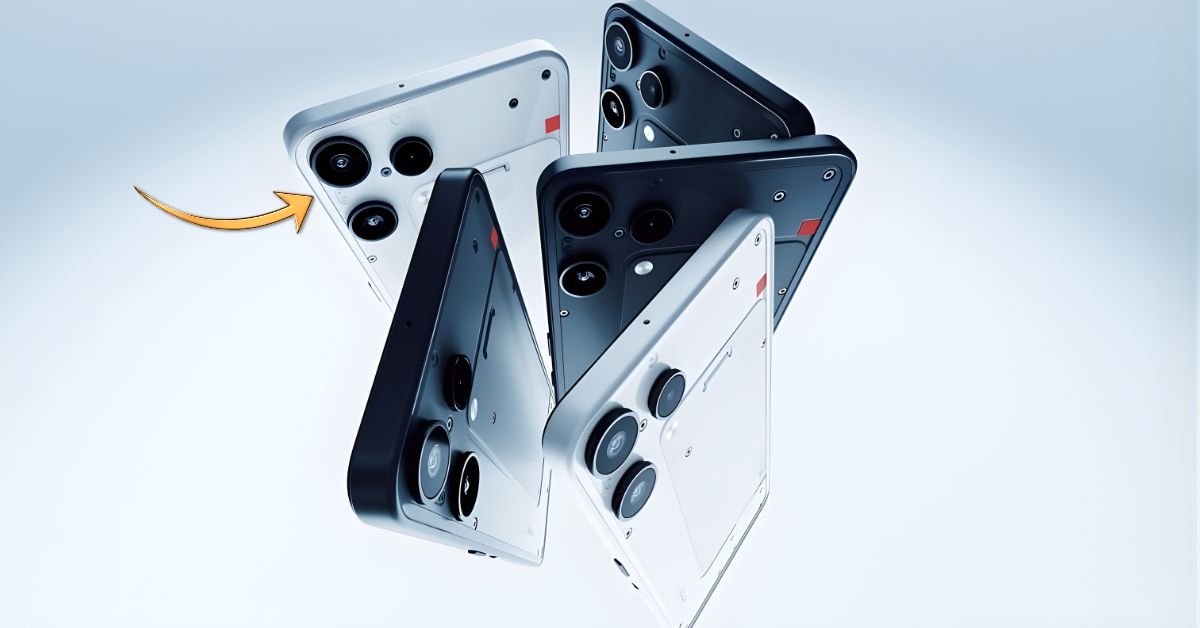
The Nothing Phone (3a) retains the brand’s iconic semi-transparent design, now featuring a refined Flexible AMOLED display and a body that balances aesthetics with durability. The design is subtly streamlined compared to its flagship siblings, though the Glyph Interface—the customizable light patterns for notifications and charging—remains a core interactive feature. The phone has an IP64 rating for dust and splash resistance, ensuring good real-world durability.
The core hardware is designed for efficient, consistent performance:
Processor: The Nothing Phone (3a) is powered by the Qualcomm Snapdragon 7s Gen 3 chipset (4nm). This octa-core processor delivers strong performance for the mid-range, focusing on efficiency and smooth daily use, rather than extreme benchmark scores.
RAM/Storage: Typically available in 8GB RAM + 128GB/256GB storage configurations, though a limited Community Edition with 12GB RAM + 256GB storage was launched in December 2025 for ₹28,999. The standard memory and storage ensure fast app launching and reliable multitasking.
Software: It runs on Nothing OS 3.1 (based on Android 15), providing a clean, unique, and bloat-free user interface. Nothing offers an industry-leading commitment of three years of major Android OS upgrades and six years of security patches, guaranteeing excellent long-term value.
The display on the Nothing Phone (3a) is a significant highlight. It features a large 6.77-inch Flexible AMOLED panel with a resolution of $1080 \times 2392$ pixels (FHD+).
Fluidity: The 120Hz adaptive refresh rate ensures exceptionally smooth scrolling and responsiveness, which is essential for a satisfying user experience.
Brightness: The panel boasts an impressive peak HDR brightness of up to 3,000 nits, with a High Brightness Mode (HBM) of approximately 1,300 nits. This high brightness makes outdoor visibility excellent, performing well even under harsh daylight.
Quality: Being an AMOLED panel, it delivers deep blacks and rich colors, and its high 2160Hz PWM dimming helps reduce eye strain during prolonged low-light use.
This AMOLED screen is one of the phone’s strongest components, delivering a near-flagship viewing experience for media consumption and daily use.
The camera system on the Nothing Phone (3a) is surprisingly versatile for its segment, notably including a dedicated telephoto lens—a feature often excluded to cut costs.
The rear features a triple-camera setup:
Primary Camera:50MP wide-angle sensor with Optical Image Stabilization (OIS). This workhorse sensor captures sharp, detailed 12.5MP binned photos with good dynamic range and natural colors. The inclusion of OIS is crucial for cleaner low-light photography and steadier 4K video recording.
Telephoto Camera:50MP telephoto sensor offering 2x optical zoom. This lens is the unexpected star, providing genuine, high-quality zoom for portraits and distant subjects without relying on digital cropping, adding immense creative versatility.
Ultrawide Camera:8MP ultra-wide sensor. While the resolution is modest, it offers a $120^\circ$ field of view for wide landscapes and group shots.
The 32MP front camera provides clear, high-resolution selfies and supports Full HD video recording. The overall camera experience is highly competent and versatile, with the inclusion of the 2x telephoto lens being a significant differentiator in this price segment.
Gaming Performance and Stability
The Nothing Phone (3a), powered by the Snapdragon 7s Gen 3 chipset, is designed to deliver stable performance for the vast majority of users, including casual to moderate gamers.
Daily Performance: The combination of the 4nm processor and the clean, well-optimized Nothing OS ensures the phone feels exceptionally fast and responsive in everyday tasks, browsing, and multitasking.
Gaming: The phone handles high-demand titles like BGMI and Genshin Impact smoothly on medium to high graphics settings. While it cannot maintain maximum settings without frame drops, the performance is reliably consistent. Test results show the phone can achieve stable frame rates for extended periods, avoiding the severe thermal throttling found in many rivals. However, the high refresh rate of 120Hz may not be supported by all high-framerate games due to developer limitations.
Battery Life and Charging
The Nothing Phone (3a) packs a substantial 5,000mAh battery, which is the gold standard for all-day reliability in modern smartphones.
The efficiency of the 4nm Snapdragon 7s Gen 3 and the LTPO-enabled AMOLED display allows the Phone (3a) to deliver excellent endurance. Real-world testing shows the phone achieves an Active Use Score of around 13.5 hours, meaning users can comfortably expect a full day of heavy usage with some power to spare.
Charging is handled by 50W wired fast charging. This speed is efficient, capable of taking the 5,000mAh battery from 0% to 100% in approximately 55 to 60 minutes. The fast charging capability, which can deliver a day’s power in under 20 minutes, minimizes downtime effectively. Note that no charger is included in the box, which is a con for first-time buyers.
Pros & Cons
Pros
Cons
Unique Design & Clean Software: Signature transparent aesthetic, functional Glyph Interface, and clean Nothing OS with no bloatware.
No Charger in Box: Users must purchase the 50W adapter separately.
Wired Charging Only: Lacks wireless charging, a feature present in some older competitors.
Triple Camera Versatility: Inclusion of a 50MP 2x optical zoom telephoto lens is a major segment differentiator.
IP64 Rating: Offers good splash resistance but not full water immersion (IP68).
Sustained Performance: Snapdragon 7s Gen 3 provides stable and efficient daily performance.
UFS 2.2 Storage: While adequate, UFS 3.1 is available on slightly pricier rivals.
Software Commitment: Three major OS updates and six years of security patches offer long-term value.
Simulated Haptics: The haptic motor is good, but not on the level of the Pro models.
Price in India (Late 2025)
The Nothing Phone (3a) launched with a highly competitive price tag, positioning it squarely to challenge the dominance of rivals like the OnePlus Nord CE series and the Samsung Galaxy A-series.
The official launch price for the standard Nothing Phone (3a) was:
8GB RAM + 128GB Storage:₹ 24,999
8GB RAM + 256GB Storage:₹ 26,999
As of late 2025, the price remains consistent, though occasional online sales and bank offers often reduce the effective price.
The limited-edition Nothing Phone (3a) Community Edition (12GB + 256GB) is priced at ₹ 28,999.
Variant
Typical Retail Price (Ex-Showroom India, Late 2025)
8GB RAM + 128GB Storage
₹ 24,999
8GB RAM + 256GB Storage
₹ 26,999
The Nothing Phone (3a) offers a rare combination of visual flair, software minimalism, and a powerful feature set (OIS, 2x zoom, 120Hz AMOLED) at a mid-range price. For users prioritizing aesthetic value and a superior software experience, the Phone (3a) remains a superb choice in 2025.
The Xiaomi 17 Pro Max is not just a smartphone; it is Xiaomi’s blueprint for the future of mobile technology in 2026. While the name suggests a simple iteration, the reality is a radical flagship that pushes boundaries in three distinct areas: battery capacity, performance consistency, and user interaction. The Hindi phrase “Snapdragon 8 Elite Gen 5 aur Dual Display ka Kamaal!” (The Magic of the Snapdragon 8 Elite Gen 5 and Dual Display!) perfectly captures the aggressive, all-in approach Xiaomi has taken, delivering a device that attempts to be the ultimate contender in every category.
Officially unveiled in late 2025 in global markets, the Xiaomi 17 Pro Max is set to redefine what a flagship device must deliver. This expert review dissects the core architecture, the groundbreaking dual-screen functionality, the engineering required to house a massive 7500mAh battery, and its subsequent impact on real-world performance.
Performance: The Snapdragon 8 Elite Gen 5 ki Taqat (The Power of Snapdragon 8 Elite Gen 5)
The engine driving theXiaomi 17 Pro Maxis the latest, custom-tuned Qualcomm Snapdragon 8 Elite Gen 5 processor. Built on the highly efficient 3nm process, this chipset features the third generation of custom Oryon cores, clocked up to a blistering 4.6 GHz. This processor is not merely fast; it is engineered for sustained performance and superior power efficiency, a critical component necessary to manage the immense power demands of a 7500mAh cell.
The chipset is supported by a significant cooling infrastructure—likely an enhanced version of Xiaomi’s massive multi-layer Vapor Chamber—designed to mitigate the thermal throttling that plagued early versions of this processor in rival devices. With AnTuTu benchmark scores nearing 3 million points, the Xiaomi 17 Pro Max delivers a CPU performance uplift of approximately 20% and a GPU performance increase of 23% over the previous generation, ensuring that every task, from heavy multitasking to ray-traced gaming, is handled with absolute fluidity. The device offers configurations up to 16GB LPDDR5X RAM and 1TB UFS 4.1 storage, maintaining the fastest available speeds for launching apps and transferring large 8K video files.
Dual Display: The New User Experience
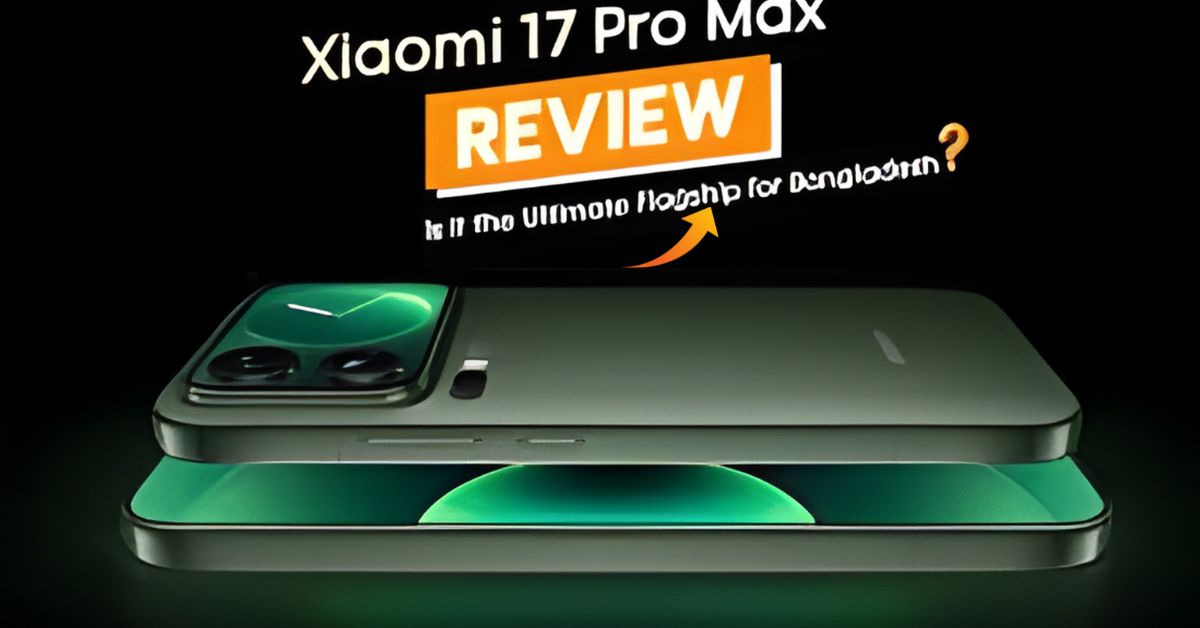
The Xiaomi 17 Pro Max is instantly recognizable by its innovative Dual Display design. This feature is an evolution of Xiaomi’s previous rear-screen experiments, perfected for usability and aesthetics.
The main display is a colossal 6.9-inch LTPO AMOLED panel with a resolution of $1200 \times 2608$ pixels, supporting a smooth 120Hz refresh rate and an industry-leading 3500 nits peak brightness. This immense brightness and the use of the new M10 display panel ensures superb visibility even in bright sunlight.
The secondary display, located on the rear, is a practical 2.9-inch LTPO AMOLED panel. This rear screen is not a mere notification ticker; it runs at a high resolution and refresh rate, allowing users to:
Use the Main Camera for Selfies: Providing a clear, high-resolution view for self-portraits and vlogging.
Display Widgets: Showcasing weather, music controls, and notifications without lighting up the large main display, thus conserving battery.
Run Quick Apps: Accessing essential tools like the timer, wallet, or voice recorder without unlocking the primary screen.
This Dual Display approach transforms the ergonomics and efficiency of the device, making it one of the most unique and feature-rich flagships in the market.
7500mAh Battery: Endurance Ka Baadshah (The King of Endurance)
The 7500mAh Silicon-Carbon battery is the second major architectural statement made by the Xiaomi 17 Pro Max. This massive capacity, one of the largest ever fitted into a non-folding flagship, fundamentally alters the flagship battery equation.
In dedicated testing, the 7500mAh cell provides an Active Use Score nearing 21 hours, meaning heavy users can confidently expect two full days of battery life, with moderate users potentially stretching to three days. This longevity is a crucial competitive advantage over rivals who rely on smaller 5000mAh batteries.
The only potential drawback—increased thickness and weight—is masterfully managed. Despite the enormous cell, the phone maintains a sleek 8.0 mm thickness and a weight of 219 grams, a testament to Xiaomi’s advanced Surge Battery technology and high silicon content packing.
Charging this mammoth battery is handled by:
100W HyperCharge Wired Charging: Achieves a full 0-100% charge in a staggering 39 minutes, a necessary speed given the battery size.
22.5W Reverse Wireless Charging: Allows the phone to act as a powerful battery pack for accessories.
Camera System: Leica-Tuned Triple 50MP Excellence
While some rumors suggested a 200MP sensor, the most credible specifications point to a highly refined Leica-tuned Triple 50MP setup, focusing on quality, consistency, and versatility across all focal lengths:
Primary Sensor: 50MP (Large 1/1.28” sensor size) with $f/1.7$ aperture and OIS.
Periscope Telephoto: 50MP sensor offering 5x optical zoom, also with OIS, and a new light-gathering prism structure for a 30% increase in light capture.
Ultrawide: 50MP sensor with a 102° field of view and PDAF.
This consistent 50MP resolution across the array ensures that images captured at 1x, 0.6x, and 5x share the same color science and detail characteristics. The integration of the Leica Summilux imaging system delivers professional-grade color science, natural skin tones, and superior optics, cementing the Xiaomi 17 Pro Max as a camera powerhouse. Video capabilities are also top-tier, supporting 8K @ 30fps and various professional cinematic modes.
Pros & Cons (The Final Tally)
Pros
Cons
Massive 7500mAh Battery: Unmatched endurance; easily a two-day phone.
Large Dimensions: Despite the slimness, the 6.9-inch screen and width make it challenging for small hands.
Snapdragon 8 Elite Gen 5: Cutting-edge performance and efficiency (4.6 GHz Oryon cores).
Dual Display Cost: The innovative rear screen adds to the overall manufacturing cost and final price.
Dual LTPO AMOLED Display: Innovative rear screen for efficiency and selfies.
Resolution Trade-off: The main screen’s 1.5K resolution, while efficient, is not the highest 2K found on some rivals.
100W HyperCharge: Charges the huge battery in a phenomenal 39 minutes.
Xiaomi HyperOS: While improved, still contains some residual bloatware and localization issues in early global releases.
IP68/IP69 Durability: Top-tier water and dust resistance, a must-have for a flagship.
Weight: At 219g, it is a heavy device, reflective of its large battery and glass build.
Price in India: Expected Market Positioning
The Xiaomi 17 Pro Max is positioned to undercut similarly specced flagships from Samsung and Apple, maintaining Xiaomi’s value proposition even in the ultra-premium segment.
Based on the highly competitive global price (around €720) and expected import duties, the estimated starting price for the Xiaomi 17 Pro Max in India is projected to be:
Variant
Expected Starting Price (Ex-Showroom India)
12GB RAM + 512GB Storage
₹ 84,999 – ₹ 94,999
This aggressive pricing ensures the Xiaomi 17 Pro Max is a disruptive force, offering superior battery capacity and charging speeds at a price significantly lower than its closest competitors.
The Xiaomi 17 Pro Max is more than a flagship; it is a marathon runner, a professional camera, and a gaming powerhouse—all wrapped into an incredibly unique and technologically advanced chassis. It is the ultimate statement of Xiaomi’s engineering prowess in 2026.
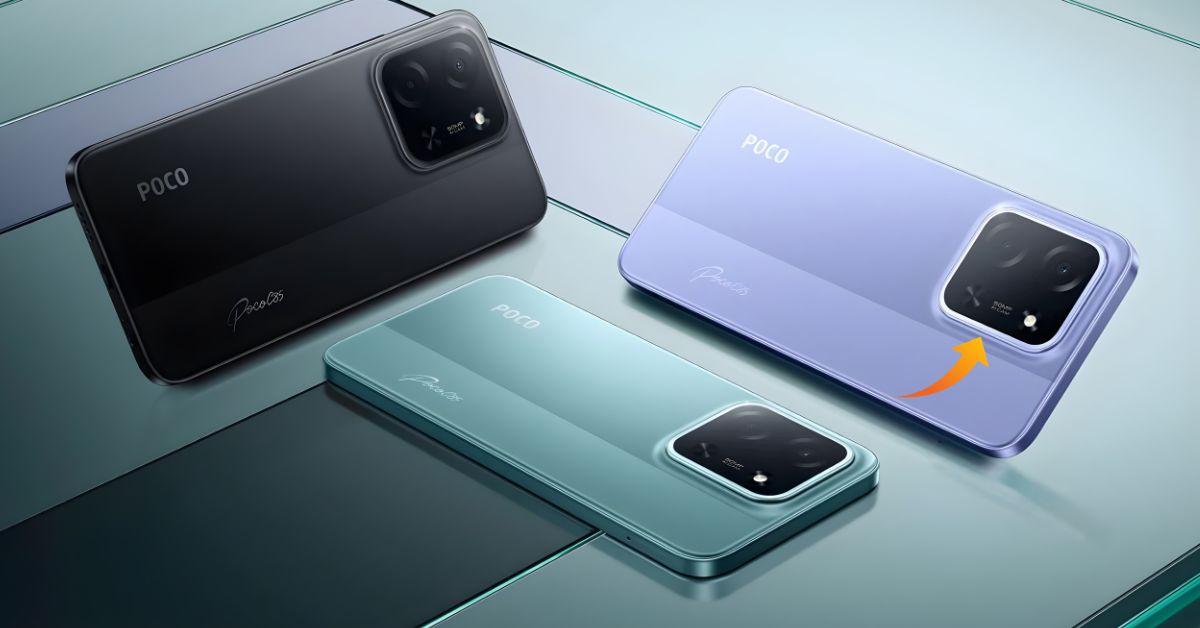
The POCO C85 5G arrives in the Indian market with a singular and uncompromising mission: to dominate the sub-₹15,000 segment by maximizing screen size and battery life. Launched officially on December 9, 2025, the C85 is the latest addition to POCO’s highly successful budget lineup, but it elevates the C-series by strategically investing in two core features that deliver the highest possible perceived value for the budget-conscious consumer: a massive display and enduring power. It’s a classic POCO move—making calculated trade-offs to deliver an unbeatable value proposition.
This comprehensive, detailed review dissects the POCO C85 5G, analyzing its core specifications, the performance metrics of its Dimensity 6300 processor, the surprising utility of its large-format display, and its competitive pricing that aims to disrupt the entry-level 5G market.
Specifications: The Dimensity 6300 Foundation
The internal architecture of the POCO C85 5G is built on the foundation of the MediaTek Dimensity 6300 5G processor. This chipset, fabricated on the power-efficient 6nm process, features a capable octa-core configuration with high-performance Cortex-A76 cores clocked up to 2.4 GHz. This strategic choice of processor ensures that the device delivers stable 5G connectivity and efficient performance, achieving a claimed AnTuTu score of over 450,000, which is highly competitive for the price segment.
The phone is available in three flexible configurations: 4GB, 6GB, and 8GB of LPDDR4X RAM, all paired with 128GB of UFS 2.2 storage, which is expandable up to 1TB via a dedicated microSD card slot. While UFS 2.2 is a necessary budget concession, it is still substantially faster than the older eMMC standards, contributing to satisfactory app loading times and system fluidity. The C85 launches with Xiaomi HyperOS 2.2 based on Android 15 and is backed by a commendable software commitment: two major Android OS upgrades and four years of security patches, providing exceptional long-term value in the budget category.
6,000mAh (Silicon-Carbon), 33W Fast Charging, 10W Reverse Charging
Durability
IP64 Rating (Dust and splash resistant)
Thickness/Weight
7.99mm / 211g
Display Quality: The 6.9-inch 120Hz Media Monster
The massive 6.9-inch display is the single most defining feature of the POCO C85 5G. POCO has prioritized maximum screen real estate for immersive media consumption—streaming, gaming, and short-form video. The sheer size of the panel immediately sets it apart from its 6.5-inch and 6.6-inch rivals.
The display features a 120Hz adaptive refresh rate, a key selling point that ensures remarkably smooth scrolling and fluid animations, a noticeable enhancement for the general user experience. With a peak brightness of 810 nits (HBM), outdoor visibility is more than adequate for most lighting conditions. However, the calculated trade-off lies in the HD+ resolution (1600 x 720 pixels). On such a large screen, the pixel density (around 254 ppi) is clearly lower than a Full HD+ panel, meaning that while video is enjoyable, fine text and intricate details are not as razor-sharp as they could be. POCO has added valuable features like TÜV Rheinland Low Blue Light and Flicker-Free certifications, making the massive screen comfortable for prolonged usage and extensive reading sessions.
Gaming Performance and Daily Usage
The POCO C85 5G is positioned as a highly capable device for the everyday user and a strong performer for casual gaming. The Dimensity 6300 chipset offers a substantial performance foundation, easily handling all common daily tasks, multitasking, and system navigation fluidly, aided by the high refresh rate.
For gaming enthusiasts, the C85 provides a satisfying experience under realistic expectations. Popular titles like Call of Duty: Mobile and BGMI run smoothly on low-to-medium graphics settings, maintaining stable frame rates for enjoyable sessions. Attempting to push graphics to high or ultra settings will introduce noticeable frame drops. Crucially, the combination of the 6nm chip and the phone’s slightly larger surface area helps with thermal management. The device handles extended gaming sessions well without becoming excessively hot, ensuring that performance consistency is maintained for a reasonable duration—a testament to its efficiency tuning.
The battery of the POCO C85 5G is its crowning achievement. It packs a massive 6,000mAh Silicon-Carbon battery, a capacity that is rapidly becoming POCO’s signature feature in the endurance segment. Coupled with the power efficiency of the Dimensity 6300 and the less demanding HD+ screen, the phone is engineered for extraordinary longevity.
POCO’s claims of over 2.26 days of typical battery life and 106 hours of continuous music playback are highly credible. In real-world usage, even heavy users can expect a comfortable full day and a half of usage, while moderate users will easily stretch past the two-day mark. When recharging is necessary, the 33W wired fast charging is a significant inclusion for a budget phone, capable of replenishing the massive cell quickly. Furthermore, the inclusion of 10W wired reverse charging allows the C85 to act as an emergency power bank, a highly practical utility often missing in this class.
Largest-in-Class Display: The 6.9-inch size is unbeatable for media consumption and browsing at this price point.
120Hz Refresh Rate: Ensures a smooth, premium feel for all on-screen interactions.
Long-Term Software Support: Commitment to two OS upgrades and four years of security patches offers excellent future-proofing.
IP64 and 33W Fast Charging: High-speed charging and enhanced durability are excellent value additions.
Cons
HD+ Resolution: The low pixel density on the large 6.9-inch panel can be noticeable, detracting from fine detail sharpness.
UFS 2.2 Storage: While fast, using UFS 3.1 would have provided a noticeable performance boost for heavy app loading.
Basic Camera Setup: The dual-camera system lacks the versatility (no dedicated ultrawide) found on some competing phones.
Single-Handed Use: The sheer size of the 6.9-inch screen makes true one-handed operation almost impossible.
Price in India: The Unbeatable Value Proposition
The POCO C85 5G is strategically priced to be the absolute value leader in the sub-₹15,000 segment. The pricing structure is highly aggressive, especially when factoring in launch offers.
The official Ex-Showroom prices for the different variants are:
Variant
Launch Price (Ex-Showroom)
Effective Price (with ₹1,000 Bank/Exchange Offer)
4GB RAM + 128GB Storage
₹ 11,999
₹ 10,999
6GB RAM + 128GB Storage
₹ 12,999
₹ 11,999
8GB RAM + 128GB Storage
₹ 14,499
₹ 13,499
The effective starting price of ₹ 10,999 positions the POCO C85 5G as an unmatched package. For the budget-conscious buyer, this price delivers a massive 120Hz display, 5G connectivity, and a battery that truly lasts for days—a combination that is impossible to ignore.
Final Verdict: The Endurance and Screen Champion
The POCO C85 5G is a brilliant exercise in maximizing consumer value. It successfully delivers a best-in-class display and endurance experience, cementing its position as the ultimate budget media consumption and battery champion. While it requires the user to accept the trade-off of an HD+ resolution, the longevity and screen size make the POCO C85 5G an ideal choice for students, travelers, and anyone whose priority is a long-lasting, large-screen smartphone experience for under ₹15,000.